Fauna Report / Article
What's actually happening to the Amazon right now
Deforestation just hit its lowest level in over a decade. That's real and worth saying clearly — and it's not the same as the forest being safe.
- ecosystems
- deforestation
- policy
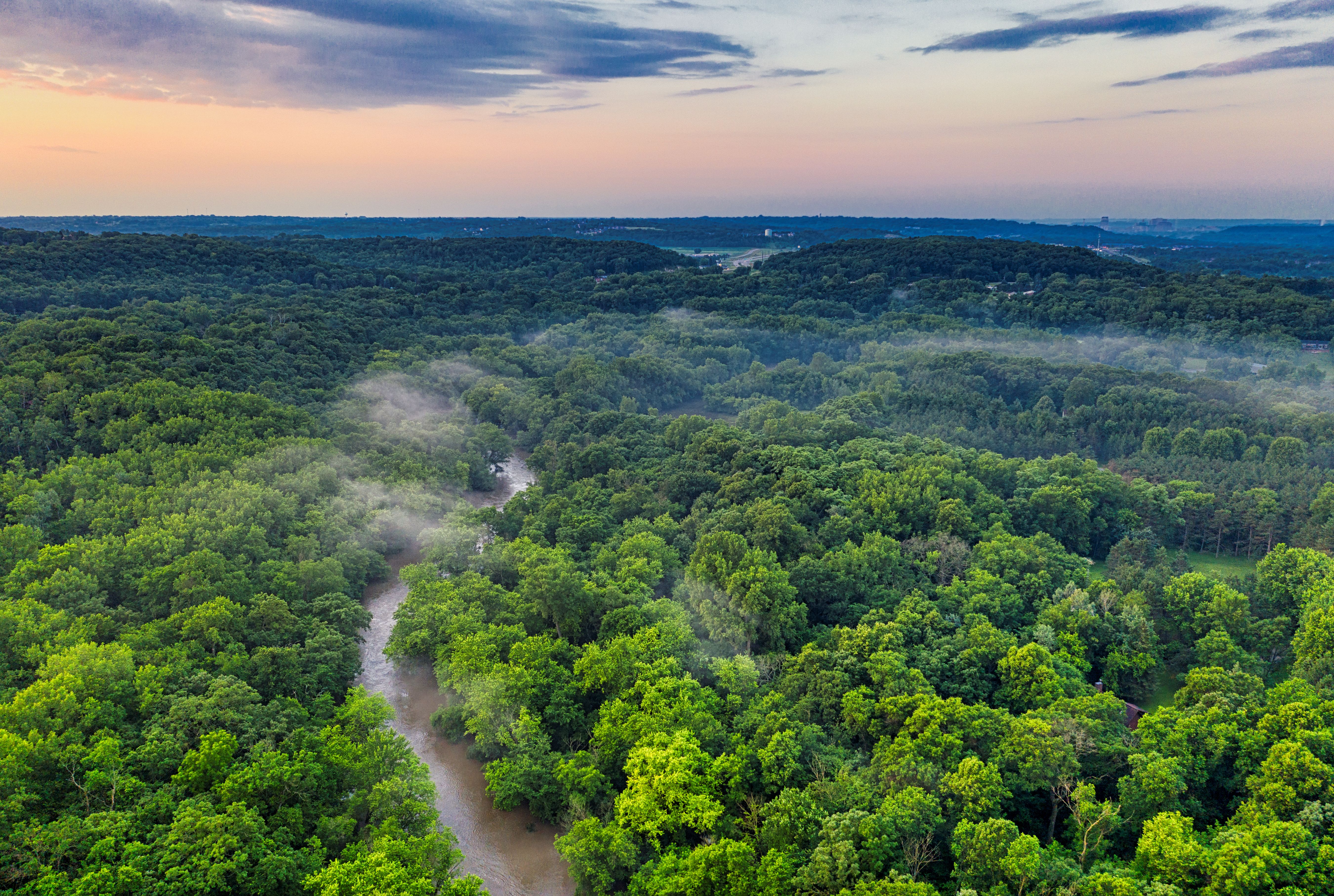
Coverage of the Amazon tends to arrive in one of two moods: alarm, or relief, depending on which number got published that week. Neither mood, taken alone, gives you an accurate picture. The actual situation, as of the most recent data, is specific enough to describe properly — and it's more encouraging than the Amazon headlines of the early 2020s, without being anything close to resolved.
The number that's genuinely good news
Brazil's National Institute for Space Research (INPE) runs the satellite systems that track forest loss across the Amazon, and the most recent full-year figures are the best in over a decade. Deforestation alerts for the 12 months ending July 2026 totalled 2,874 square kilometres — down 36% from the year before, and the lowest total since 2013. That's roughly 56% below the average of the preceding ten years.
The slowdown isn't a blip in one report. Independent monitoring from Imazon, a separate Brazilian research institute using its own satellite system, found a similar pattern: about 1,460 square kilometres cleared between August 2025 and March 2026, the smallest area for that period since 2017. Forest degradation — partial damage from logging and fire that doesn't fully clear the canopy — fell even more sharply in some months, down as much as 95% year-on-year in March 2026.
This decline tracks closely with a change in enforcement policy after 2023, following a period in the preceding administration when protections were relaxed and clearing was, in effect, tolerated. Over the past four years, the area under deforestation alerts has totalled 19,642 square kilometres — a 41% drop compared with the 33,400 square kilometres cleared over the previous four-year period, an area larger than Belgium.
What this number doesn't cover
Deforestation, in the way these figures define it, means forest that's been completely cleared — cut down and converted to pasture, cropland or settlement. It's an important number, and it's the one that makes headlines. It is not the same thing as forest health, and three gaps are worth knowing about before treating "deforestation is down" as "the Amazon is fine."
Degradation is a separate, and separately dangerous, category. A forest can remain standing and still be damaged — thinned by selective logging, dried out by drought, burned around the edges by fires that don't fully clear it, weakened along the borders of cleared land nearby. None of this shows up in a deforestation count, because the canopy is technically still there. But degraded forest stores less carbon, supports less wildlife, and becomes progressively more flammable and more vulnerable to the next drought — which is its own accelerating problem.
Fire risk hasn't tracked the same downward line as clear-cutting. In 2024, fire accounted for an estimated 60% of primary forest loss in the Brazilian Amazon, and the first half of 2025 saw a 27% rise in area burned compared with the year before, driven partly by a severe regional drought. The first half of 2026 brought a real improvement — burned area nearly 40% below the 2013–2025 average — but forecasters were tracking a strong El Niño pattern for the second half of the year, a climate condition that tends to bring hotter, drier conditions and higher fire risk to parts of the Amazon regardless of what enforcement policy is doing.
Cumulative loss is not the same question as this year's rate. A slower rate of clearing is genuinely good, but it's a slower rate applied to a forest that has already lost a substantial share of its original extent over the past half-century, with the remaining forest correspondingly more exposed at its edges and more sensitive to further disturbance. A good year on the rate doesn't undo the accumulated total, any more than a good year of saving undoes an existing debt.
Why the trend is still the headline
None of those caveats erase the real finding: enforcement policy visibly moved the number, in the right direction, at meaningful scale, inside of a few years. That's not a small thing in a system usually described as running away from any policy lever at all. Researchers at Imazon and the Amazon Environmental Research Institute have been explicit that this reflects political will translating into results, not a natural fluctuation.
The honest reading holds both facts at once: the rate of new clearing has genuinely, substantially slowed, and the forest remains under real, ongoing pressure from degradation, fire and the compounding effects of a warming climate — pressure that a single good year of deforestation data doesn't resolve, and that could reverse if enforcement lapses the way it did in the preceding decade.
How to read the next Amazon headline
Three questions separate a meaningful update from a partial one:
- Deforestation, degradation, or fire? They're tracked separately, move on different timelines, and a good number on one doesn't guarantee a good number on the others.
- This year's rate, or the cumulative total? A falling rate is real progress. It isn't the same claim as "the forest is no longer shrinking" or "past losses are reversed."
- Is the source INPE's near-real-time alerts (DETER), or its slower, more precise annual figures (PRODES)? Alert-based numbers are the fastest available signal and are usually directionally right, but the official annual total, released later, is the one that eventually gets treated as definitive.
The Amazon in 2026 is not the emergency of the early part of the decade, and it's not "fine." It's a forest where a specific policy choice produced a specific, measurable result — and where that result remains only as durable as the choice behind it.
Sources and further reading
- Mongabay — Amazon deforestation alerts fall to lowest level since 2013, Brazilian data show — INPE's 2,874 km² figure for August 2025–July 2026, and the degradation and fire context.
- Observatório do Clima — Amazon deforestation alerts hit all-time low in 2026 — the four-year comparison with the 2019–2022 period and avoided-emissions estimate.
- Inside Climate News — Amazon Deforestation at Eight-Year Low, Report Shows — Imazon's independent figures and the fire-risk counterpoint.