Fauna Report / Article
The tiger's numbers are finally rising, and that's not the whole story
Wild tiger populations have grown for the first time in a century. A newer, less-reported assessment explains why "recovering" and "still in deep trouble" are both true at once.
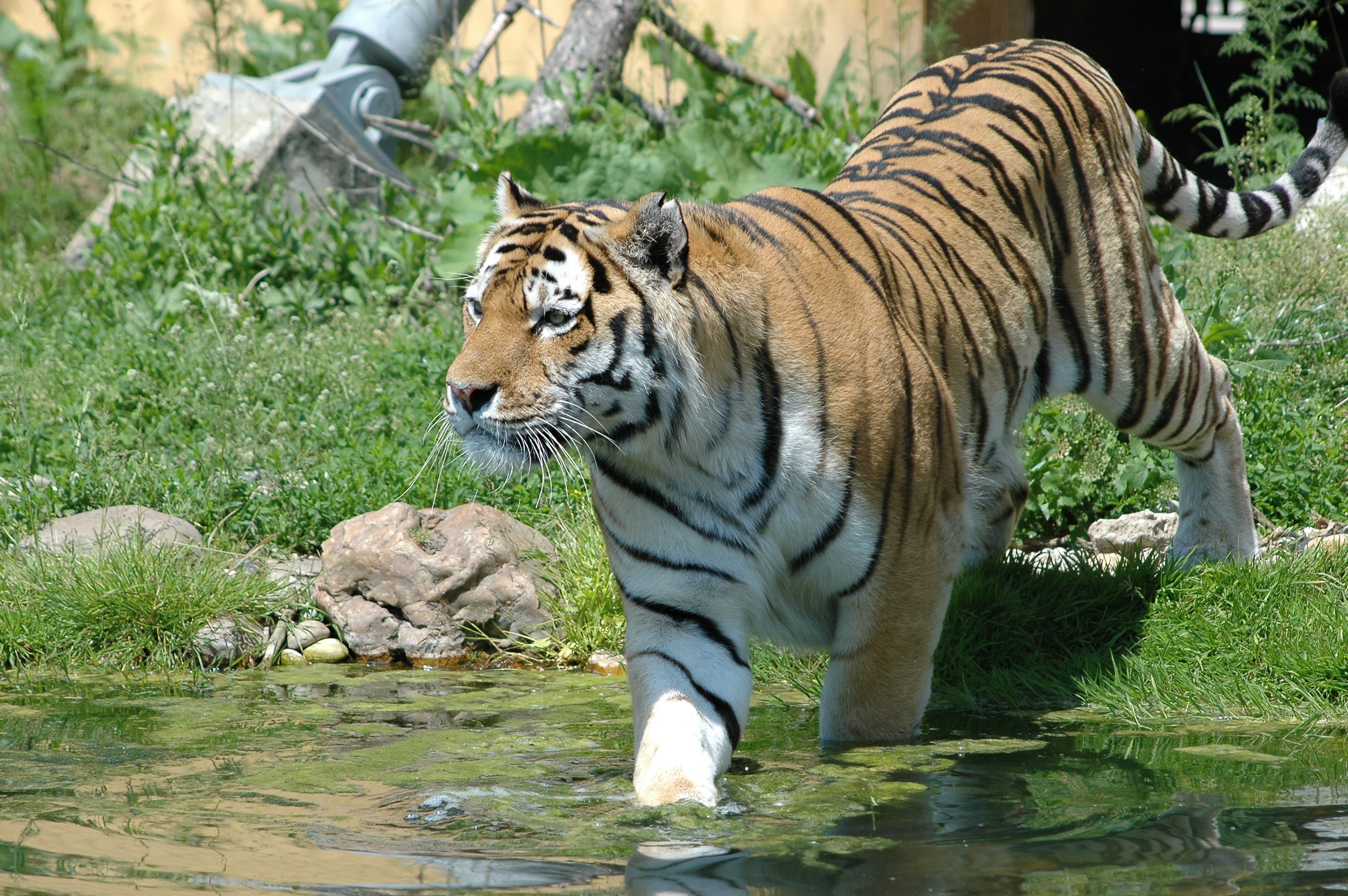
For most of the last hundred years, any story about wild tigers was a story about decline. That changed, quietly, in the past decade: global tiger numbers have gone up, not down, for the first time since anyone started counting seriously. It's a genuine success. It's also a much smaller success than the good headlines suggest, and the tiger's own conservation status says so directly.
The number that's rising
The most recent IUCN Red List assessment puts the global wild tiger population at somewhere between 3,726 and 5,578 individuals, with roughly 3,140 of those mature adults. The Global Tiger Forum's national-survey tally lands close by, around 5,574. Either way, that's up from an estimated 3,200 in 2009 and a low point of roughly 3,200 mature individuals in the mid-2010s — a rise of something like 40% in under two decades.
India accounts for most of it. Its national tiger count rose from 1,706 in 2010 to 3,682 by 2022, and it now holds around three-quarters of all wild tigers on Earth. Nepal, Bhutan, Russia and China have also seen stable or growing numbers. It's the first time in the history of tiger conservation that the trend line has pointed up instead of down, and it's the direct result of decades of anti-poaching enforcement, protected-area management and, in India especially, a sustained national program dating back to 1973.
Set against the number that opened the century — around 100,000 tigers in 1900 — even the good news is a story of a 95% collapse that has only just stopped getting worse.
Two different report cards, and why they don't contradict each other
Here's where it gets more interesting than a single number can capture. In 2025, the IUCN released something newer than the familiar Red List: a Green Status assessment, a separate framework built specifically to measure recovery rather than extinction risk. It rated the tiger "Critically Depleted."
These aren't competing verdicts. The Red List asks: how close is this species to disappearing right now? The Green Status asks a different question: how far has this species recovered compared to what a healthy, fully functioning population across its historic range would look like? A species can be stable — even growing — on the first measure while still being deeply hollowed out on the second, and the tiger is exactly that case.
The Green Status assessment found tigers now occupy just 10 of the 46 countries where they once bred, and are regionally extinct in 9 of 24 range units evaluated. Three entire subspecies are already gone: the Bali tiger, last confirmed in 1937; the Javan tiger, gone by the 1980s; and the Caspian tiger, gone by the 1970s. In Cambodia, Vietnam and Laos, tigers are considered functionally extinct — the odd individual may remain, but no breeding population does. The assessment's own Species Recovery Score put the tiger at roughly 14% of the way back to a fully recovered state.
Rising numbers inside a shrinking map
The two findings fit together once you separate two different things: how many tigers exist, and where tigers exist. The population has grown mainly by getting denser within an already-fragmented range — more tigers packed into the protected pockets that still work, particularly in South Asia — not by tigers reclaiming lost ground. Most of the historic range is simply gone, converted to farmland, plantations or settlement, and isn't coming back.
This is the same distinction that matters across a lot of conservation reporting, and it's worth carrying into how you read any "population up" story: a rising count inside a shrinking or static range is a different kind of good news than a rising count inside an expanding one. The first is stabilization within a smaller world. The second is actual recovery.
What recovery would even take
The IUCN's own modelling is unusually specific about what full recovery could look like. If tigers were restored to all suitable historic habitat — through natural recolonization or active reintroduction — the researchers estimate the global population could exceed 25,000, more than five times today's numbers. They rate the tiger's long-term recovery potential as "Medium": achievable with sustained effort, not likely by default.
Getting there means expanding into currently empty but suitable habitat, not just protecting the tigers already present — rebuilding prey populations, securing corridors between fragmented reserves, and holding political commitment across multiple countries for decades. Every piece of that is harder than protecting an existing population, which is exactly why the recovery so far, real as it is, has mostly been about slowing the bleeding rather than closing the wound.
How to read the next tiger headline
When a new count or a new status comes out, three questions separate a genuine turning point from a technicality:
- Is the population growing, or just getting more concentrated in less space? Both can show up as "numbers are up."
- Which framework is being cited — extinction risk (Red List) or recovery progress (Green Status)? They measure different things and can point in different directions at once.
- Range recovery or population recovery? More tigers in the same shrunken map is a real win. More tigers across more of the historic range is a different, much larger one.
The tiger is one of the only large predators on Earth with a documented, multi-decade population increase — that's not spin, it happened. It's also a species that has lost 90% of its range and exists today at a small fraction of what a recovered population would look like. Both of those are the honest headline. Most stories only print one.
Sources and further reading
- IUCN Red List — Tiger (Panthera tigris), assessment summary via the Cat Specialist Group — the 2021/2022 population estimate of 3,726–5,578 individuals and its methodology.
- Wildlife Conservation Society — New IUCN Assessment Finds Hope for Tiger Recovery Despite Critical Depletion (2025) — the first IUCN Green Status of Species assessment for the tiger, its "Critically Depleted" rating and the 25,000-tiger recovery estimate.
- BirdGuides — Tiger classified as 'Critically Depleted' under IUCN Green Status — the Species Recovery Score and priority recovery landscapes.