Fauna Report / Article
Why counting wild animals is so hard
When a headline says "only 4,000 remain", where does the number come from? The methods behind the counts, and why they sometimes disagree.
- science
- populations
- methods
"Fewer than 4,000 tigers remain in the wild." Sentences like this appear every week. People rarely ask the obvious question: how do you count something that hides, moves, and lives scattered across forests no one enters?
The answer is that you almost never count it. You estimate it. And understanding that difference changes how you read any number about wildlife.
Counting them all is the exception, not the rule
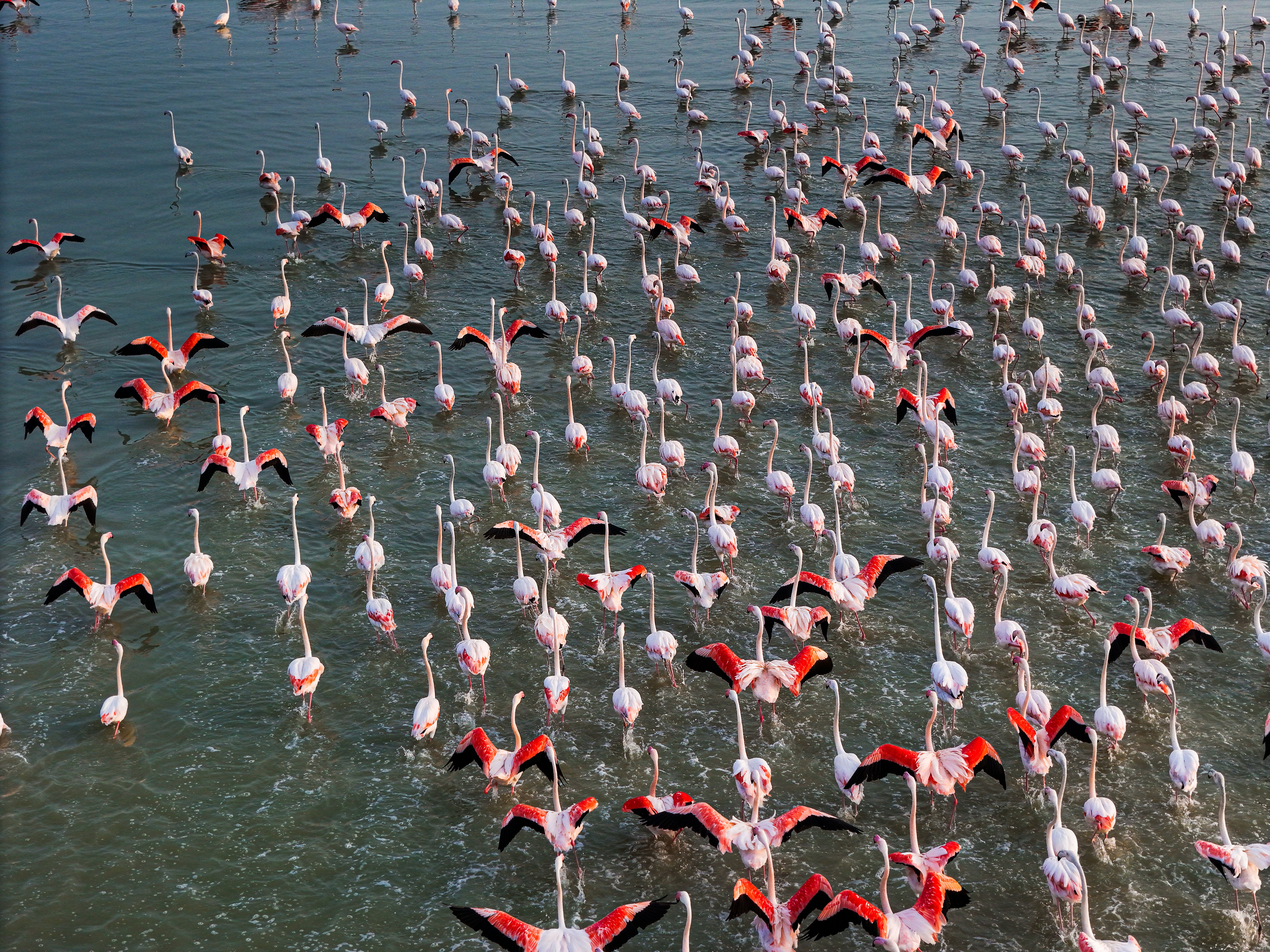
Direct counting — looking and adding up — only works in rare cases: large animals, in open terrain, in small numbers. A few flocks of birds in a bounded wetland, a colony of seals on a beach. Outside those cases, counting every individual is impossible, and every number you read comes from one of three indirect methods.
Method 1: capture, mark, capture again
The oldest method, and still the most used. You capture a group, mark them, and release them. Some time later, you capture another group. The proportion of marked animals in the second group lets you estimate the total.
If you marked 100, and one in ten animals in the second capture was already marked, the population is around a thousand. The logic is simple; the execution is the hard part, because it assumes the marked animals mix back in at random — and animals don't cooperate with that assumption.
Method 2: count signs, not animals
Many species are counted by what they leave behind. Droppings, tracks, burrows, marks on trees, calls. Forest elephants, for example, are often estimated from the density of dung, combined with what's known about how much one animal produces per day and how long it takes to disappear.
It sounds indirect because it is. But in dense forest, where seeing an elephant at ten metres is rare, it's often the only workable method.
Method 3: cameras, DNA and sound
Technology has changed the game over the last decade.
Camera traps fire on movement. In species with individual patterns — a tiger's stripes, a leopard's spots — each individual is recognisable, and the problem becomes almost a direct count.
Environmental DNA detects genetic traces left in water or soil. A sample from a river reveals which species have passed through without a single one being seen.
Acoustic sensors record songs and calls over months, useful for birds, bats and whales.
Why the numbers sometimes disagree
Here's the part that causes confusion. Two serious studies of the same species can arrive at different numbers — not because one is wrong, but because:
- They measured different areas. A national estimate and a regional one aren't comparable, even for the same species.
- They used different methods, each with its own built-in bias.
- They express uncertainty differently. Almost every serious estimate is a range — "between 2,500 and 3,500" — and the press tends to pick a round number from the middle, losing the margin.
When two headlines disagree, the right response is rarely "one of them is lying". It's that estimating wild populations is genuinely hard, and the honesty lives in the range, not the single number.
What to do with this
Next time you read a number about a species, ask three questions: what area does it cover, by what method was it obtained, and what's the range behind the round number?
This isn't scepticism. It's reading the estimate the way it was made — with the uncertainty included. A number without a range isn't more certain; it's just less honest about what it doesn't know.
Sources and further reading
- Karanth, K.U. & Nichols, J.D. (1998). Estimation of tiger densities in India using photographic captures and recaptures. Ecology 79: 2852–2862 — the landmark study establishing camera-trap capture–recapture for wildlife.
- Spatially explicit capture–recapture through camera trapping: a review — an accessible overview of how modern density estimation actually works, building on the mark–recapture framework of Otis et al. (1978).